Hema Fresh vs. Xiaoxiang Supermarket: What Overseas Retailers Should Watch
Hema Fresh hit 107B RMB GMV and turned profitable. Meituan's Xiaoxiang Supermarket is now attacking. What can global retailers learn from this battle?
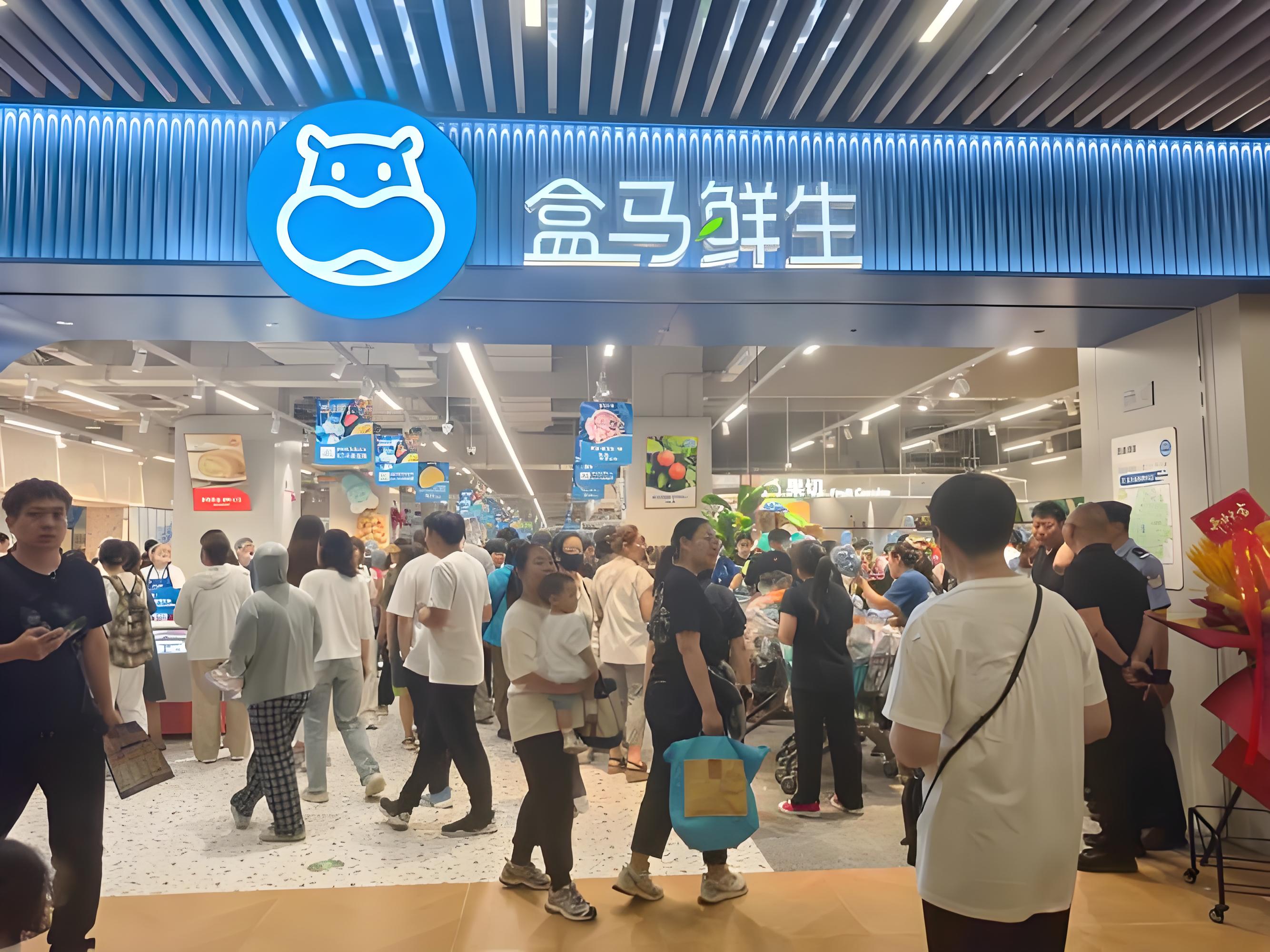
China's grocery war just entered a new phase. Hema Fresh (Alibaba's new retail pioneer) just crossed RMB 107 billion GMV and is now profitable for two straight years. Meanwhile, Xiaoxiang Supermarket — Meituan's freshly-armed grocery arm — is expanding aggressively, opening its first flagship stores and throwing down a direct challenge.
For overseas retailers watching from afar, this isn't just a China story. It's a live experiment in what the supermarket of the future actually looks like.
How Hema Fresh Went from "Burning Cash" to Profitable
Just a few years ago, Hema was the poster child for over-innovation: too many formats, too many experiments, rumors of being sold off. Then something changed.
1. They stopped innovating — and killed 10+ formats
Hema shut down Hema Neighborhood, Hema Mini, Hema X Member Store, and a dozen other scattered experiments. They narrowed to just two core formats: the full-size Hema Fresh store, and the smaller discount-oriented Hema NB.
This is counterintuitive but crucial: concentrating formats beats experimenting endlessly. Too many formats spread supply chain, training, and store operations too thin.
2. The profit formula: margin × order density × fixed-cost efficiency
Hema's turnaround isn't magic — it's a multiplication:
- Product margin (own-brand + C2M private labels)
- Order density (online orders per store per day)
- Fixed-cost efficiency (smaller store footprint, shared supply chain)
Get any one of these wrong and the math falls apart. Get all three right and a 100+ billion RMB business flips to profit.
3. The moat: product power + digital operations
Hema's real advantage isn't the app — it's the own-brand products (Hema's own ready-to-eat meals, baked goods, and fresh-prepared food that you can't buy anywhere else), combined with a fully digital inventory and ordering system.
4. The final pivot: riding Alibaba's traffic
Hema now plugs directly into Taobao's instant-delivery network, doing 2 million online orders per day. Instead of paying to build their own traffic, they inherited Alibaba's 1-billion-user base.
Xiaoxiang Supermarket: Meituan's Attack
Now Meituan — China's dominant on-demand delivery platform — is launching Xiaoxiang Supermarket. We visited their South China flagship. What stands out:
- Meituan's core advantage: they already own the 30-minute delivery network. Xiaoxiang doesn't need to build logistics — it plugs into Meituan's existing fleet.
- Smaller footprint, faster expansion: stores are compact, designed for online-first ordering with minimal in-store shopping experience.
- Price pressure: backed by Meituan's cash, Xiaoxiang is aggressively pricing to win market share.
What This Means for Overseas Supermarkets
Lesson 1: Format focus beats format variety
If you're running 3+ store formats and none is clearly profitable, copy Hema's move: kill the experiments, double down on what works. One well-executed format beats three half-baked ones.
Lesson 2: Own-brand prepared food is the profit center
The future of supermarkets isn't more packaged brands. It's ready-to-eat, fresh-prepared, and own-brand products that customers can't order online. This is why Hema and Xiaoxiang both bet heavily on in-store kitchens and bakeries.
Lesson 3: Online orders are not optional
Hema does 2 million online orders a day. Xiaoxiang is built online-first. Even if you're not in China, your customers will increasingly expect 15–30 minute delivery or pickup. The question isn't whether to offer it — it's how to afford it.
Lesson 4: Supply chain scale is the real winner
Both Hema and Xiaoxiang are ultimately fighting a supply-chain war. Whoever can source fresher goods at lower cost wins. This is exactly where China's manufacturing ecosystem gives you an edge — if you know how to tap it.
Key Takeaway: China's retail leaders are converging on the same formula: focused format + own-brand fresh food + integrated online delivery + scale supply chain. Overseas retailers who start building these four pieces now will be ready when the same competition arrives in their market.