Why Your Supermarket Fit-Out Costs 30% More Than It Should
How much markup do local retail equipment dealers add? Real cost comparison: factory-direct from China vs. local distributor, for shelving, refrigeration, lighting, and POS.
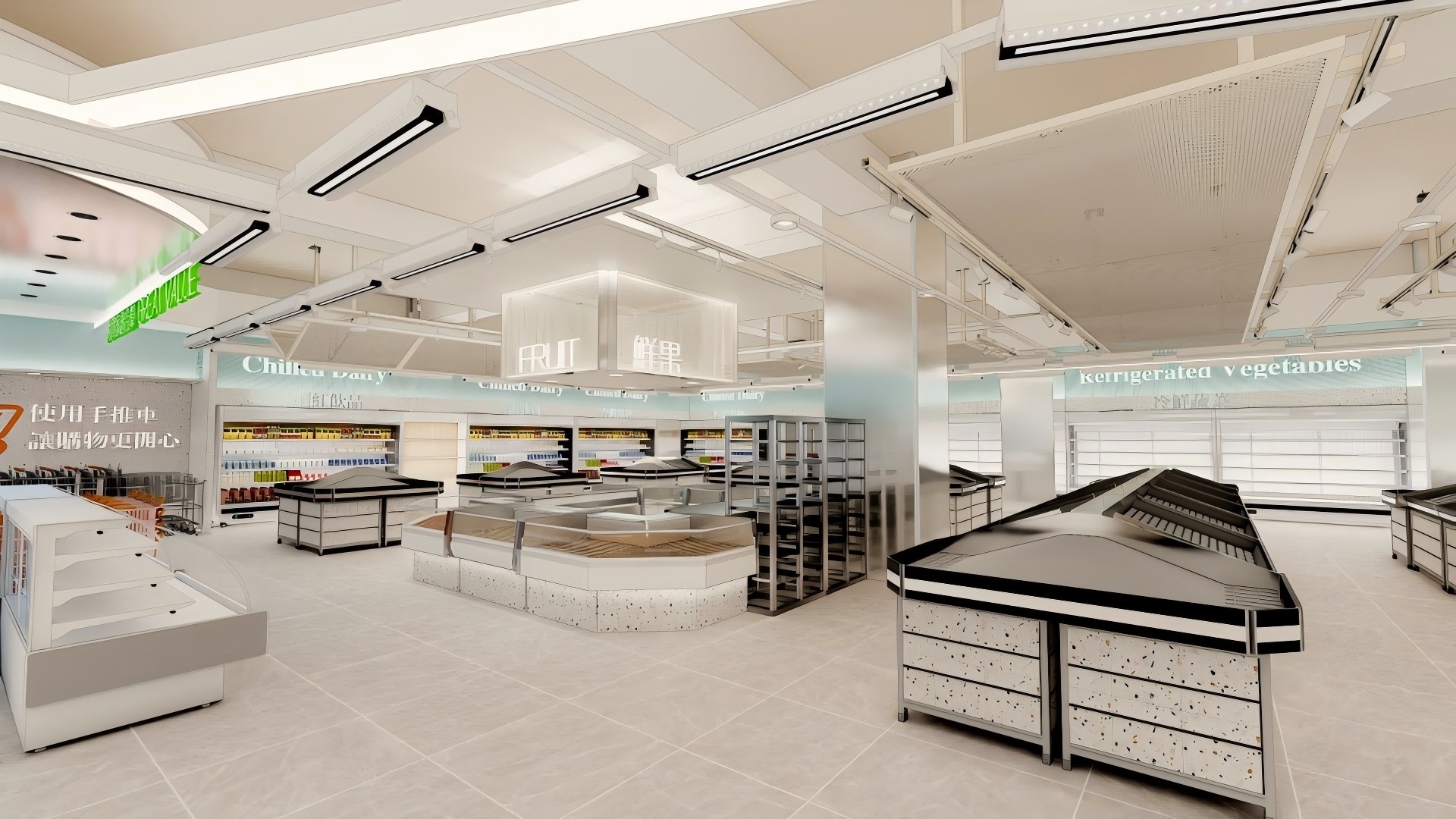
When a retailer in Taiwan, China, Malaysia, or Dubai gets a quote for a 1,000 m² supermarket fit-out, the number is usually $300,000–$500,000. The customer assumes this is "what it costs." It's not. It's what it costs when three middlemen take their cut between the factory and your store.
Here's where the money goes, and how to cut 25–30% without compromising quality.
How does the middleman markup stack up?
Most supermarket equipment sold outside China moves through 2–3 intermediaries before it reaches your store:
| Layer | Who | Typical Markup |
|---|---|---|
| 1. Factory | Manufacturer in China | 0% (base price) |
| 2. Trading Company / Exporter | Buys from factory, exports to your country | +15–25% |
| 3. Local Distributor | Warehouses, sells to you locally | +20–40% |
| 4. Design / Fit-out Contractor | Purchases on your behalf, adds margin | +10–20% |
By the time equipment reaches your loading dock, the original factory price has been marked up 45–85%. That's not a guess — these are standard industry margins for commercial refrigeration and shelving distribution in Southeast Asia and the Middle East.
Real Price Comparison: What You Actually Pay
Let's price out a typical 1,000 m² supermarket equipment package. Numbers are based on 2026 factory-direct quotes we've received from vetted Chinese manufacturers:
| Equipment Category | Factory Direct (China) | Local Distributor | You Save |
|---|---|---|---|
| Gondola shelving (120 linear meters) | $18,000 | $32,000 | $14,000 |
| Refrigerated cases (produce + meat + dairy) | $45,000 | $78,000 | $33,000 |
| LED lighting system | $8,000 | $14,000 | $6,000 |
| POS systems (5 registers) | $6,000 | $10,500 | $4,500 |
| Electronic shelf labels (2,000 tags) | $12,000 | $21,000 | $9,000 |
| Checkout counters (5 lanes) | $9,000 | $16,000 | $7,000 |
| Total Equipment Package | $98,000 | $171,500 | $73,500 (43%) |
Add design fees, shipping, customs, and installation on top, and a 1,000 m² store that costs $150,000 factory-direct from China costs $220,000–$250,000 through local channels. That's the 25–30% difference we talk about.
Why Don't More People Buy Directly?
Because buying from China factories sounds scary if you've never done it. The concerns are real:
- "What if the equipment arrives broken?" — Factories pack for ocean freight, but quality varies. You need someone on the ground to inspect before shipping.
- "What if I order the wrong size?" — Shelving and cold cases are custom-built. One wrong dimension and you're stuck.
- "Who handles the paperwork?" — Export docs, HS codes, customs clearance — it's a process.
- "Who do I call if something breaks after installation?" — Chinese factories don't do overseas after-sales.
These are exactly the problems our service solves. We visit factories in person (100+ verified on site), inspect production before shipment, handle export coordination, and design the store layout so every piece fits. You pay factory prices directly — we charge a separate, transparent service fee on top.
What should you do next?
If you're planning a new store or renovation:
- Get a local distributor quote first. You need a baseline to compare against.
- Get a factory-direct quote from China. The numbers will surprise you.
- Add shipping, insurance, and customs. Even landed cost, you're still 25–30% ahead.
- Budget for a local installer. You still need someone on site to assemble shelving and plug in refrigeration. That's typically 10–15% of equipment cost — and worth it.
Key Takeaway: A 1,000 m² supermarket equipment package costs roughly $98,000 factory-direct from China vs. $171,500 through local distributors. The 43% gap shrinks to 25–30% after shipping, customs, and local installation — still a six-figure saving on a typical project. The catch: you need someone who knows the factories, speaks the language, and inspects before shipping. That's what we do.