Sam's Club vs. Hema vs. ALDI: Three Supermarket Models, Three Winning Strategies
Membership warehouse, fresh-food digital, and hard discount — three winning supermarket models. Which one should your next store follow?
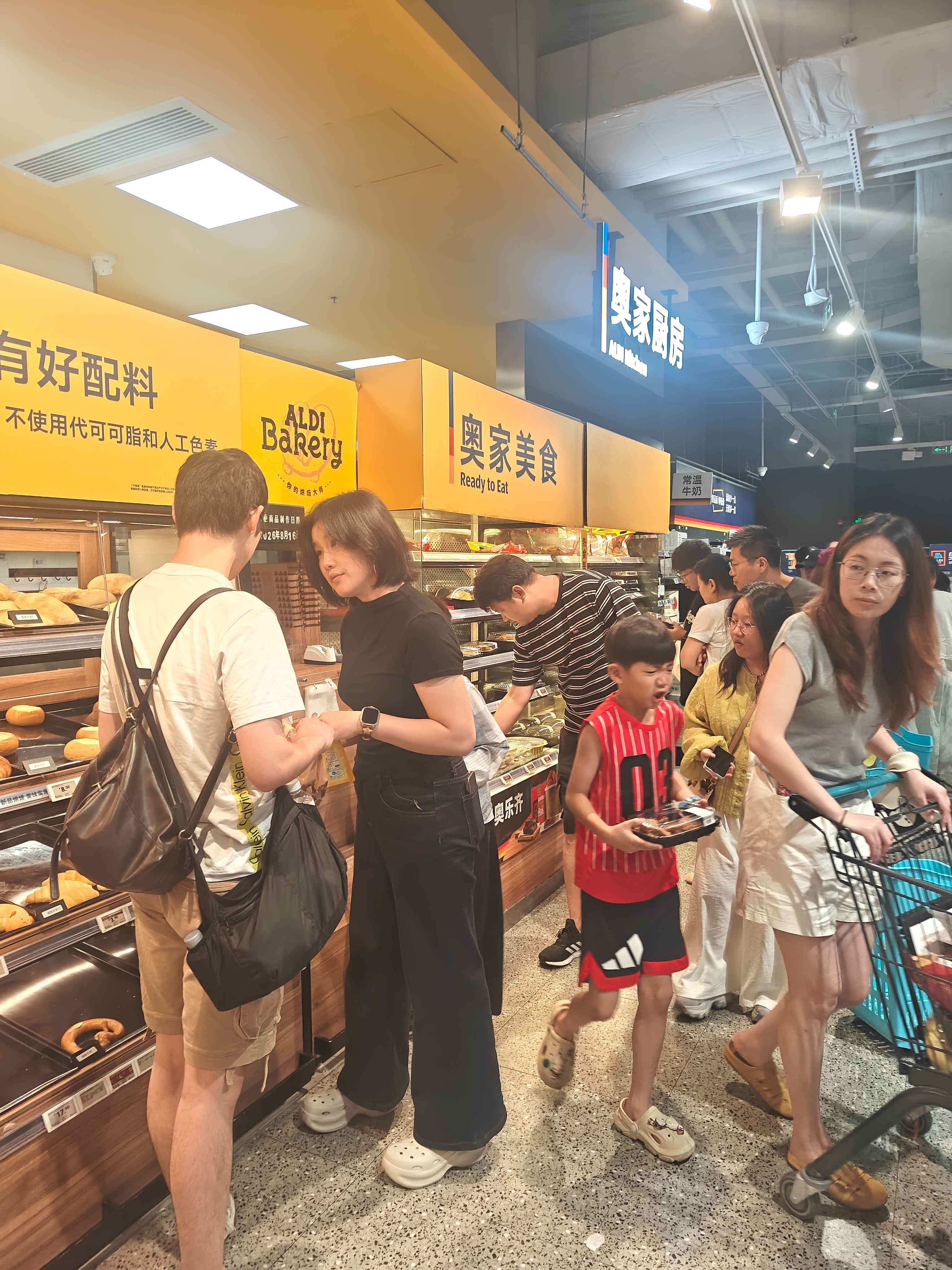
Walk into any booming grocery market in 2026, and you'll notice the same three archetypes winning: the membership warehouse (Sam's Club, Costco), the fresh-food digital store (Hema Fresh), and the hard-discount shop (ALDI). They look like supermarkets — but they are actually three completely different businesses.
Model 1: The Membership Warehouse — Sam's Club / Costco
The core logic: You don't make money on products. You make money on membership fees.
- SKU count: ~4,000 items (a normal supermarket has 30,000+)
- Format: Huge boxes, bulk packaging, limited choice
- Profit source: Membership fee ($60–$120/year) = nearly 100% of operating profit
- Own brand: Kirkland Signature = 30%+ of sales
Why it works: By limiting SKUs and buying in massive bulk, Sam's negotiates rock-bottom prices. Customers pay for the privilege of buying cheaply. It's a flywheel: more members → more buying power → lower prices → more members.
Works best in: Suburban markets with car ownership, middle-class households with storage space.
Model 2: The Fresh-Food Digital Store — Hema Fresh
The core logic: Fresh prepared food + integrated online delivery = a completely different shopping habit.
- SKU count: ~6,000–8,000, with heavy weight on fresh food and ready-to-eat meals
- Format: Urban mall stores, 3,000–5,000 sqm, in-store kitchens, fresh seafood tanks
- Profit source: High-margin fresh prepared food + own-brand products
- Digital: 30-minute delivery from every store; online orders can be 50%+ of total
Why it works: Young urban customers don't want to cook — they want fresh, restaurant-quality food delivered in 30 minutes. Hema is both a supermarket and a ghost kitchen. You can't get this on Amazon.
Works best in: Dense urban markets, young professionals, high population density.
Model 3: The Hard-Discount Store — ALDI
The core logic: Strip everything down to the absolute minimum and win on price.
- SKU count: ~1,500 items (yes, fifteen hundred)
- Format: No frills. No decor. No branded products.
- Profit source: Tiny margins on massive volume. 90% own-brand.
- Operational design: No bagging staff, pallet shelving, limited opening hours
Why it works: In a cost-of-living crisis, customers don't want choice — they want cheap. ALDI has quietly become one of the most profitable grocery models in Europe and is now invading the US.
Works best in: Price-sensitive markets, working-class neighborhoods, recessionary environments.
Which Model Should You Follow?
There is no universal answer. But ask yourself three questions:
- Are your customers car-driving suburban families? → Warehouse / membership model
- Are they dense urban professionals who order delivery? → Fresh-food digital model
- Are they price-sensitive and cost-conscious? → Hard-discount model
Most markets actually support multiple formats — Sam's serves the suburbs, Hema serves downtown, ALDI serves value-seekers. The mistake most retailers make is trying to be all three at once and failing at all of them.
What This Means for Your Next Store
Before you design your next store, decide which model you're actually building. The design, the fixtures, the equipment, the layout — everything changes based on your choice:
- Warehouse model → big open floor, pallet racking, bulk displays
- Fresh-food model → in-store kitchens, seafood tanks, cold chain everywhere
- Hard-discount model → minimal buildout, simple shelving, maximum efficiency
At ChinaRetailDesign, we've designed stores across all three formats and source the fixtures and equipment from the factories that supply the Chinese chains themselves.
Key Takeaway: The future of grocery isn't one model — it's three. Pick the one that matches your customer, then execute it ruthlessly. The worst strategy is being a "middle" supermarket with no clear identity.