Gondola Shelving Buying Guide: What Overseas Buyers Need to Know
How to buy gondola shelving from China: steel grade and thickness, load capacity, backboard options, certifications, MOQ, container loading, HS codes and the mistakes overseas buyers make.
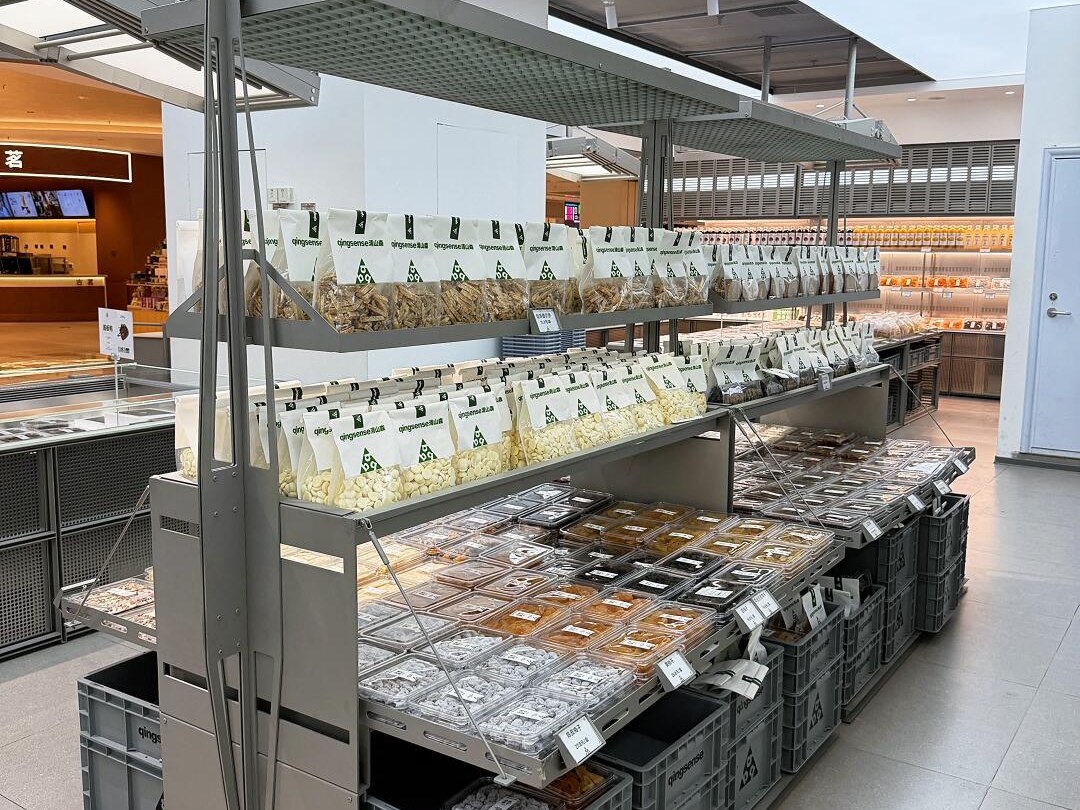
Gondola shelving is the single largest hardware line item in most supermarket fit-outs, and it is also where overseas buyers lose the most money - not because the product is bad, but because the specification was never actually agreed.
Two factories can quote "1200 mm gondola, 4 shelves, 80 kg per layer" and ship two completely different products. The difference hides in the steel grade, the upright section, the shelf thickness, the back panel and the coating - none of which appear on a one-line quote.
This guide walks through what to check before you wire a deposit: terminology, spec sheets, steel, load, backboards, accessories, certification, MOQ, freight, HS classification, inspection and the mistakes that cost buyers the most.
1. First, Get the Terminology Right
Most quoting problems start with vocabulary. A "gondola run" is not one product - it is a system of three unit types, and factories price them differently.
| Unit type | Also called | Where it goes | Typical depth |
|---|---|---|---|
| Single-sided | Wall gondola, wall shelving | Against perimeter walls, backs onto the wall | 450 / 500 / 550 / 600 mm |
| Double-sided | Aisle gondola, island unit | Centre of the floor, shopped from both sides | 900 / 1000 / 1100 / 1200 mm |
| End cap | End shelf, gondola end | Ends of a run, facing the main aisle | Matches the run it caps |
Two more terms you will see on every drawing:
- Starter unit - has uprights on both ends. Every run begins with one.
- Add-on (connect) unit - has only one upright and bolts to the unit beside it. Cheaper per metre because it shares a frame.
If your quote prices every bay as a starter unit, you are overpaying. A 12-bay run needs one starter and eleven add-ons - not twelve starters.
2. The Standard Spec Sheet, Decoded
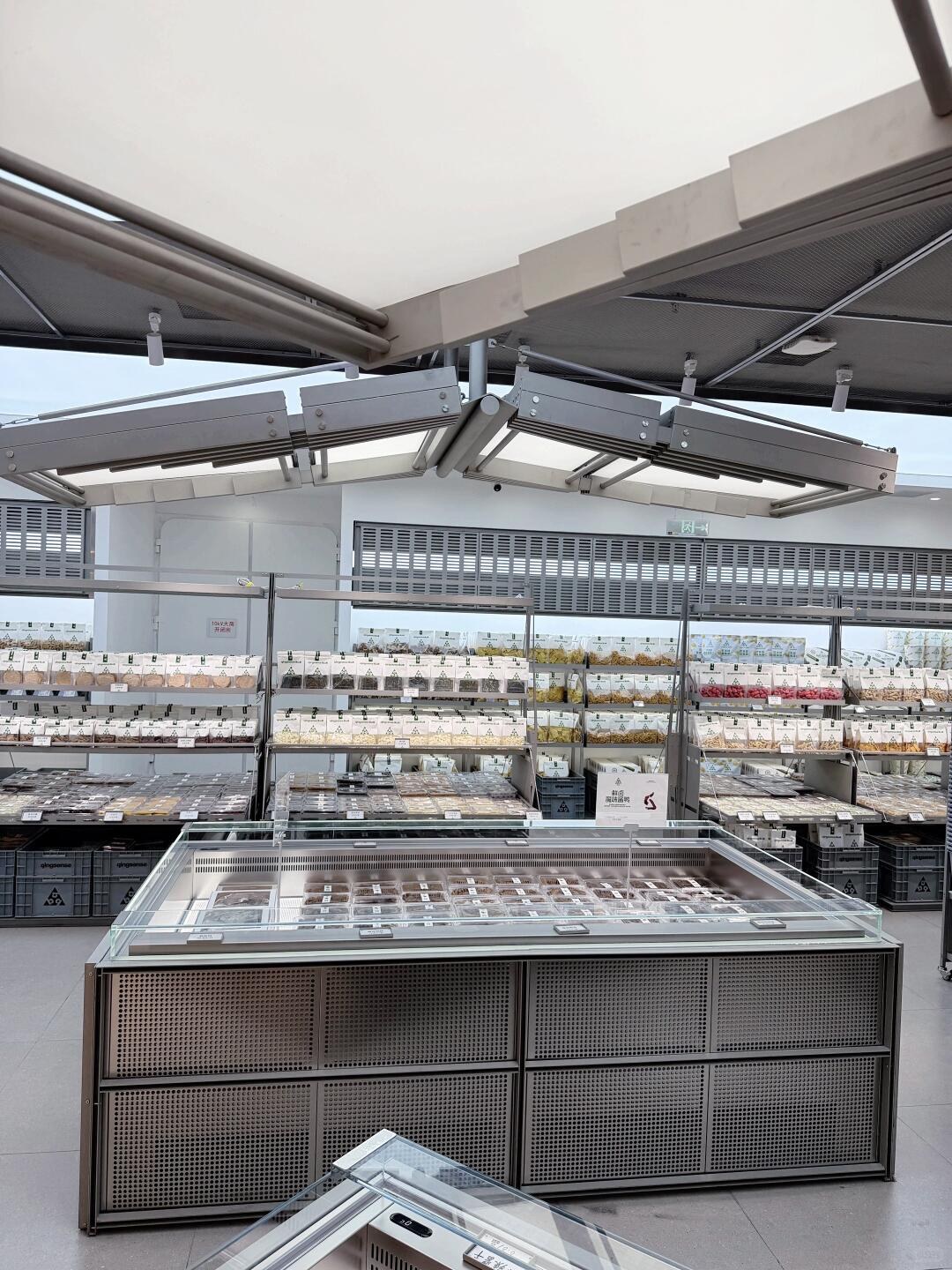
Chinese gondola production is highly standardised. These are the dimensions you will meet on almost every quote:
| Item | Single-sided (wall) | Double-sided (aisle) | Note |
|---|---|---|---|
| Length per bay | 900 / 1000 / 1200 mm | 900 / 1000 / 1200 mm | 1200 mm is the most common for supermarkets |
| Depth (W) | 450 / 500 / 550 / 600 mm | 900 / 1000 / 1100 / 1200 mm | Double-sided = 2 × single-sided depth |
| Height (H) | 1470 / 1770 / 1970 / 2170 mm | 1470 / 1770 / 1970 / 2170 mm | See the sightline rule below |
| Layers | 1–7 | 1–7 | Base + adjustable shelves |
| Shelf pitch | 25 / 50 mm adjustable | 25 / 50 mm adjustable | Set by the hole pattern on the upright |
| Load per layer | 60–120 kg | 60–120 kg | Uniformly distributed - see Section 4 |
| Material | Q235B cold-rolled steel | Equivalent to S235JR / ASTM A36 grade family | |
| Finish | Acid pickling + electrostatic powder coating | Ask for coating thickness in µm | |
One geometry rule worth locking into your drawing before you price anything: gondola height is what keeps sightlines open. In a conventional supermarket, 1500–1800 mm keeps shoppers able to see across the floor; reserve 2000 mm+ for wall runs and the deeper parts of the store. If you are still fixing the plan itself, read the supermarket floor plan guide first - shelving height only works when the layout does.
3. Steel: What to Check Before Anything Else
This is where quotes diverge and where cheap units fail. Four numbers decide whether a shelving system survives ten years or three:
- Steel grade. Ask for Q235B cold-rolled steel (or the equivalent local grade). It is the industry standard for retail shelving. If a quote just says "steel", ask which grade.
- Upright section. Typical retail sections run 30×60 / 30×70 / 30×80 mm in 1.5–3.0 mm gauge. A heavier upright carries more load and resists the "lean" that develops in tall runs.
- Shelf board thickness. Commonly 0.5–1.0 mm, often with ribs or folded edges for stiffness. A 0.5 mm flat board and a 0.8 mm ribbed board may carry the same quoted load - but behave very differently after two years of restocking.
- Back panel thickness. Typically 0.4–0.8 mm. The back panel is structural on wall units; too thin and the whole run flexes when shoppers lean on it.
The test that actually works: ask for the weight of one bay. Two quotes for the same 1200 × 500 × 1970 mm unit can differ by 15 kg - and that difference is almost entirely steel. Weight per bay is the fastest honest cross-check on a spec sheet, and it also drives your freight cost (Section 8).
4. Load Capacity: What "80 kg per Layer" Actually Means
"80 kg per layer" on a quote sheet is a uniformly distributed load for one shelf level on one bay. It is not a point load, and it is not a whole-bay figure.
- A 1000 mm shelf rated 80 kg per layer carries roughly 80 kg per running metre.
- Stacking cases of bottled water in one spot on that shelf breaks the assumption - the local load can exceed the rating while the average looks fine.
- Heavy categories (beverages, tinned goods, pet food) belong on base shelves and the lowest adjustable levels, not on the top shelf.
When you compare quotes, ask the supplier to state three figures separately: load per layer, load per bay, and load per upright. Factories that can produce all three from a drawing are factories with a real engineering department. Factories that only say "80 kg" are reselling someone else's catalogue.
5. Backboard Options and What Each One Is For
The back panel is not just a cover - it is a merchandising decision.
| Backboard | What it is | Best for |
|---|---|---|
| Plain / flat back | Closed steel panel | Standard grocery, lowest cost, most rigid |
| Pegboard | Perforated hole grid | Hanging hooks and accessories, small items |
| Slatwall | Horizontal grooved panels | Flexible accessory mounting, premium and apparel lines |
| Wire mesh | Welded grid panel | Airflow, visibility, bakery and produce-adjacent displays |
Most stores mix them: plain backs on main grocery runs, pegboard or slatwall on impulse and specialty runs. Mixing is normal for a factory - but say so at enquiry stage, because backboard type changes the price and the packing volume.
6. Accessories: The 20% Nobody Quotes
On most projects, accessories end up as 15–25% of the order value - and they are the line item most often left off a first quotation. Get them into the RFQ from day one:
- Price tag / label holders - front fence strips, plastic or aluminium
- Shelf dividers - vertical separators for a tidy facings
- Front guardrails and fences - stop stock sliding off
- Hooks - for pegboard and slatwall backs
- Baskets and wire bins - loose produce, impulse zones
- Castors / base feet - fixed feet as standard, castors for reconfiguration
- Corner units - to turn runs around columns and corners
- Shelf lighting strips - under-shelf LED, see the lighting guide
A useful discipline: build your RFQ as one bill of materials per bay type - unit, backboard, accessories, colour - rather than a paragraph of prose. Factories quote from BOMs accurately and from prose reluctantly.
7. Certification: What to Ask For (and What It Actually Covers)
Certificates prove two different things, and buyers often confuse them.
Factory-level certification - about how the plant is run:
- ISO 9001 - quality management system
- ISO 14001 - environmental management
- BSCI - social compliance audit, increasingly required by European retail groups
Product-level certification - about what ships:
- CE - European conformity marking
- RoHS - restriction of hazardous substances in coatings and finishes
- SGS - third-party test reports on steel and coating
- SONCAP - mandatory pre-export conformity for Nigeria; several other markets have equivalents
Ask for the certificate numbers and validity dates, not just the logos. A supplier who emails a four-page PDF with scope and expiry is a different kind of supplier from one who sends a logo montage.
Also check your own market's rules: some markets apply local fire and accessibility requirements to retail fixtures, and powder coating may need to meet local VOC or food-adjacency rules. Your importer of record or customs broker should confirm this before production - not after the container sails.
8. MOQ and Container Loading: How Your Real Unit Price Is Set
This is the section that determines whether you pay $40 or $70 per bay for the same shelf.
MOQ varies by factory type. Trading companies and small workshops may accept 30–50 pieces. Many steel factories quote MOQ as one 20-foot container - roughly 23 tonnes or 28 CBM. Neither is wrong; they are different cost structures. What matters is which model fits your project.
The lever you control is container fill. Standard container dimensions set the ceiling:
| Container | Internal L × W × H | Volume | Max payload |
|---|---|---|---|
| 20GP | 5.9 × 2.3 × 2.3 m | ~28 CBM | ~23 t |
| 40GP | 11.9 × 2.3 × 2.3 m | ~56 CBM | ~26 t |
| 40HQ | 11.9 × 2.3 × 2.6 m | ~68 CBM | ~26 t |
| 45HQ | 13.5 × 2.3 × 2.7 m | ~76 CBM | ~27 t |
Three practical consequences:
- Gondola ships knock-down (KD). Uprights, shelves and back panels pack flat. This is why container-loaded shelving is dramatically cheaper per bay than pre-assembled units - insist on KD packing and get the assembly instructions in English.
- Mix SKUs to fill the box. Wall units, double-sided runs, end caps, castors and accessories pack together. A container of one SKU almost always ships half-empty; a mixed BOM usually fills it.
- Weight, not volume, can be the limit. Steel is dense. A 20GP container of fully loaded shelving can hit the 23-tonne payload before it hits 28 CBM - which is another reason the per-bay weight from Section 3 matters: it tells you how many bays actually fit.
Reference point: Chinese suppliers commonly quote completed retail shelving in the region of $100–200 per double-sided bay ex-works depending on height, gauge and coating - but treat any per-unit number as meaningless until you know the steel weight, the container fill and the Incoterm behind it.
9. HS Code and Duty: 9403.20 vs 7308.90
Retail shelving sits between two tariff headings, and the difference is real money:
- HS 9403.20 - other metal furniture. The usual heading for finished retail shelving and gondola units.
- HS 7308.90 - structures of iron or steel. Sometimes used for racking and structural frames.
The two headings attract different duty rates in many markets, and customs authorities do not always agree with the exporter's choice. Misclassification is one of the most common causes of clearance delays, re-classification charges and penalties.
Do this before production: give your customs broker the drawing, the BOM and the material spec, and ask them to confirm the heading and duty rate for your market. Then make sure the packing list and commercial invoice use the same classification consistently. Ten minutes here prevents a container sitting in port for three weeks.
10. Samples, Inspection and Payment Terms
Samples. Most factories offer samples for a fee, commonly refunded against the bulk order. A sample costs the factory a set-up run, so expect to pay for it - and expect it in 7–15 days. Judge the sample on coating finish, weld quality, hole alignment and how the shelf sits level, not just on whether it holds weight.
Payment. The market-standard terms are 30% T/T deposit, 70% against the copy of the bill of lading. Letters of credit are accepted by larger factories. Be careful with anyone demanding 100% upfront - that is a trading company taking no position on quality, not a manufacturer confident in one.
Inspection. For a first order, book a third-party pre-shipment inspection (2–3 days, a few hundred dollars). Check: dimensions against the drawing, coating adhesion, weld quality, hole alignment across bays, packing list against the BOM, and container loading photos. A factory that welcomes inspection is telling you something. One that resists it is telling you something else.
11. From Drawing to Delivery: A Realistic Timeline
| Stage | Typical duration | What you should be doing |
|---|---|---|
| Enquiry + drawings | 3–7 days | Send the BOM and plan; agree dimensions and finishes |
| Sample production | 7–15 days | Approve coating colour, backboard, accessories |
| Sample approval + revisions | 5–10 days | Sign off the golden sample; freeze the spec |
| Bulk production | 15–30 days | Confirm HS code and duty with your broker |
| Pre-shipment inspection | 2–3 days | Third-party QC against the approved sample |
| Booking + transit | 20–40 days | Depends on route, season and port congestion |
Realistic total: 8–12 weeks door to door. If a supplier quotes "two weeks delivery" for a first order with custom colours, something in the process is being skipped - usually the sample stage, occasionally the coating cure.
12. Ten Mistakes Overseas Buyers Make
- Quoting "1200 gondola, 4 shelves" without steel gauge, upright section or back panel thickness.
- Pricing every bay as a starter unit instead of one starter plus add-ons.
- Treating "80 kg per layer" as a point-load figure and stacking beverages in the middle of a shelf.
- Leaving accessories out of the RFQ and discovering them at 2× the unit price later.
- Accepting logo photos instead of certificate numbers and validity dates.
- Ordering a container of one SKU that ships half-empty instead of a mixed BOM that fills it.
- Not confirming the HS heading with a customs broker before production.
- Skipping the pre-shipment inspection on a first order.
- Ordering pre-assembled units and paying freight for air.
- Designing the shelving before the floor plan - then discovering the gondola heights block sightlines.
13. How do you shortlist a factory?
The reliable filter is not the lowest quote. It is whether the factory can answer engineering questions from its own drawings. Use this checklist:
- Can they state load per layer, per bay and per upright from a drawing?
- Can they give you the weight of one bay - and does it match the steel gauge they quoted?
- Will they send certificate numbers with validity dates?
- Do they welcome third-party pre-shipment inspection?
- Have they shipped to your market before, and do they know its conformity requirements?
This is also how we work. Rather than reselling a catalogue, we buy direct from three audited Chinese shelving factories:
- AERTAI (Suzhou, since 2001) - 40,000 m² factory plus a 3,800 m² showroom, 10 product series and 580+ models, certified to ISO 9001 / ISO 14001 / CE / RoHS / SGS / BSCI, serving 3,000+ stores a year and exporting to 60+ countries.
- Suzhou Jiacheng (JIAHE) - supplies international retail groups including ALDI, Tesco, Carrefour, Edeka, SPAR and Nitori; core strength in SPAR 2-in-1 racking and multi-format supermarket projects.
- Changshu Biaoxin (Renhe Group) (since 1999) - 75,000 m² factory under 6S / ERP management, 11 shelving series and one-stop supermarket zoning solutions.
Each is audited on site, and we quote from your BOM and plan rather than from a catalogue page.
Key Takeaway: The price per bay is an output, not an input. Lock the steel grade, upright section, shelf and back panel thickness, per-layer / per-bay / per-upright loads, backboard type and accessories into a BOM first - then compare quotes on weight per bay, container fill and certificate numbers. That is how overseas buyers get factory pricing without factory-risk quality.
Frequently Asked Questions
What does 80 kg per layer actually mean on a shelving quote?
It is a uniformly distributed load per shelf level on one bay, not a point load. A 1,000 mm shelf carrying 80 kg holds roughly 80 kg per running metre. Stacking heavy cartons in one spot, or loading end bays differently from the middle, voids the figure. Ask the supplier to state load per layer, per bay and per upright.
What is the typical MOQ for supermarket shelving from China?
It varies by factory. Small producers may accept 30–50 pieces; many steel factories quote MOQ as one 20-foot container (about 23 tonnes or 28 CBM). The practical way to hit MOQ cheaply is to mix wall units, double-sided runs and end caps in one container rather than ordering a single SKU.
Which HS code applies to supermarket gondola shelving?
Retail shelving is commonly classified either under 9403.20 (other metal furniture) or 7308.90 (structures of iron or steel). The two headings attract different duty rates in many markets, and misclassification causes clearance delays and penalties. Confirm the correct heading with your customs broker before booking.
How long does a shelving order take from drawing to delivery?
Typically 8–12 weeks door to door: 3–7 days for enquiry and drawings, 7–15 days for a sample, 5–10 days for approval, 15–30 days for bulk production, 2–3 days for third-party inspection, then 20–40 days of transit depending on the route and season.
See our vetted shelving factories →
Related: how store layout drives long-term profit →
Related: how to plan a supermarket floor plan →