Produce Department Design: Layout, Lighting and Refrigeration
How to design a supermarket produce department: wet vs dry zoning, fixture economics, multideck refrigeration and temperature zones, misting and ethylene control, and the lighting specs (CCT, CRI, lux) that make fresh…
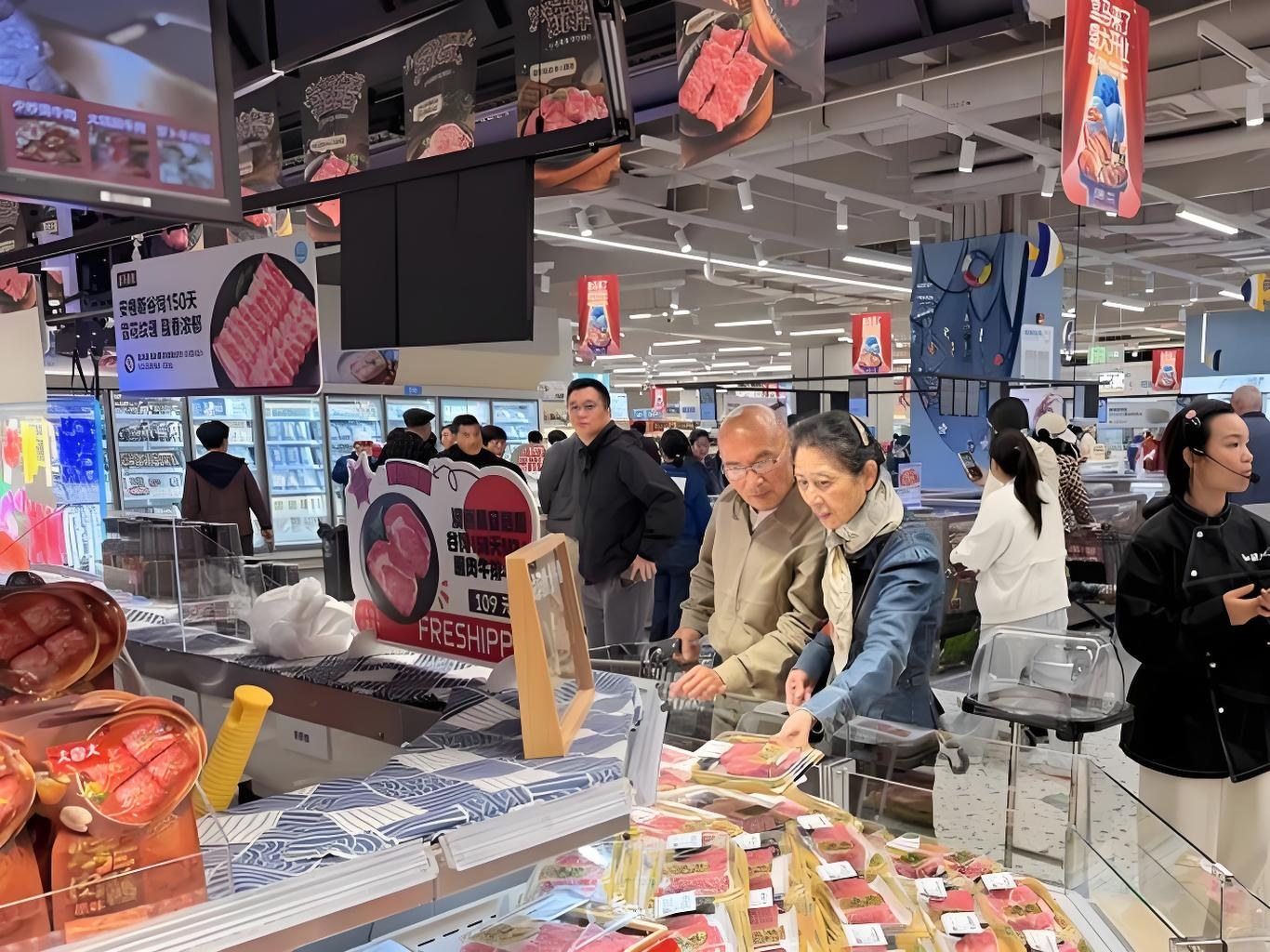
The produce department is the first thing a shopper sees and the most expensive thing a retailer gets wrong. It carries the highest margins in the store and the highest shrink in the store. It sets the freshness perception for everything else you sell. And unlike center store, almost every decision in it — where the wet rack goes, which case runs at which temperature, what colour the light is — is a technical decision with a measurable sales consequence.
This guide covers the three systems that have to be designed together: layout (zoning, fixtures, circulation), lighting (spectrum, brightness, protection) and refrigeration (case types, temperature zones, humidity and ethylene control). The numbers are the ones that actually get specified on live projects.
1. Why does produce get designed first?
Produce earns its position at the front of the store. The economics, from IFPA/Circana benchmark data on US supermarkets:
| Metric | Typical value | What it means for design |
|---|---|---|
| Gross margin | 37–39% | Highest-margin major department — worth premium fixtures |
| Share of edible store sales | 10–15% | Small footprint, outsized traffic role |
| Contribution (margin − labour − shrink) | ~23–25% | Labour at ~8% of sales, shrink ~5–6% — design for easy replenishment |
| Shrink | 5–12% of sales | The highest of any department (center store: 1–3%) |
| Avg department size (US) | ~6,500 sq ft | Space has grown while productivity fell |
| Sales per sq ft (produce) | $172 (2025), down from ~$407 (2022) | Adding produce area without adding throughput destroys ROI |
Two lessons fall out of these numbers. First, produce is a traffic and perception department: shoppers judge the whole store by it, so it earns prime real estate even where its own square footage is modest. Second, its profitability is decided less by how much space you give it than by how well the space controls temperature, humidity and handling — which is exactly what the rest of this article is about.
2. Where Produce Goes in the Floor Plan
The rules from floor-plan planning apply with force here:
- Immediately inside the entrance. Produce is the freshness signal. Shoppers should meet colour and abundance within seconds of walking in.
- First right-hand zone. 60–70% of shoppers turn right on entry. Put the most vibrant colour-blocking — citrus, apples, peppers, grapes — in that first sightline.
- Back onto the walk-in coolers. Every metre between the back door and the display is a metre of warming, bruising and shrink. The wet rack wall should back directly onto the cold room wall.
- Adjacent to floral, facing the main loop. The perimeter wet wall anchors the racetrack; dry tables and islands sit in the centre grid with 3.0–4.0 m aisles so trolleys and replenishment carts can pass.
- Near the front end, not the back. Produce bags, scales and heavy items generate the most returns trips; keep the department on the shopping path early, not at the far corner.
One caution: the entrance position means the department also takes the store's worst thermal load — door swings, drafts, daylight. That is a refrigeration design problem, and it is addressed in section 6.
3. Wet vs dry: what is the core zoning decision?
Produce is really two departments sharing one floor area, and confusing them is the most common design error:
| Wet zone (refrigerated) | Dry zone (ambient) | |
|---|---|---|
| Products | Leafy greens, herbs, brassica, berries, cut fruit, salad packs | Bananas (13–15°C), potatoes, onions, whole melons, citrus, tomatoes, hard squash |
| Fixtures | Refrigerated multideck, wet rack with misting, iced decks | Tiered tables, island bins, sloped crates |
| Temperature / RH | 1–4°C, 90–95% RH | 10–15°C for chilling-sensitive lines; dry and ventilated for roots |
| Drainage | Required — sloped decks, floor drains, washdown | None — keep soil (potatoes, onions) away from ready-to-eat |
| Replenishment | Little and often, FIFO, shallow fills | Bulk fills tolerate deeper stacking |
Sequence them so the wet wall runs continuously along the perimeter and the dry tables form the centre islands. Never interleave them — every transition is a temperature break and a double-handling cost.
4. Fixture Selection and What Each One Earns
Fixtures should be chosen by product behaviour, not catalogue aesthetics. Sturdy lines (apples, citrus, potatoes, onions) suit sloped tiered tables; delicate lines (berries, stone fruit, tomatoes, mushrooms) need shallow trays that limit pile depth; leafy lines belong on the wet rack. US benchmark figures for fixture economics:
| Fixture | Unit cost (US, 2025) | Sales / linear ft / week | Typical payback |
|---|---|---|---|
| Wire dump bin | $150–280 | ~$340 | 3–4 weeks |
| Mobile cart | $320–600 | ~$210 | 2–3 months |
| Endcap (~4 ft) | $480–900 | ~$580 | 2–3 months |
| Tiered produce table | $700–1,400 | ~$420 | 4–6 months |
| Gondola run (~8 ft) | $900–1,800 | ~$180 | 8–12 months |
| Refrigerated multideck | $3,200–4,500 | ~$650 | 10–14 months |
The pattern: cheap ambient fixtures pay back fast but only fit a few categories; the refrigerated multideck is expensive but carries the highest revenue density because it holds the high-margin, high-frequency lines. Specify powder-coated steel frames, food-safe washable bins, modular removable trays and replaceable parts — the department is washed down daily.
5. The Refrigerated Case Lineup
Most produce walls are built from a family of cases that lineup together. The workhorses:
- Low-profile multideck (~1.5 m high). The produce wall standard. Low enough to preserve sightlines across the store, deep enough for bulk fills. Often paired with mirrored superstructures.
- Full-height dual air-curtain multideck (up to ~3.75 m wide, ~3,000 L). For wall lines and larger formats. Two or three air curtains hold the temperature band.
- Two- or three-deck display units and single-deck tables. For intermixed wrapped/unwrapped produce; unwrapped lines want low-velocity air forced up through the product plus misting.
- Mini multidecks. For end-caps and promotional positions.
Plug-in vs remote. Plug-in cases (self-contained compressors) install in days and suit stores under roughly 20 refrigeration units, convenience formats and trials. Remote systems (central compressor rack in a machine room) are quieter on the sales floor, easier to maintain at scale and better at handling heat rejection in large stores — the default for full supermarkets. Whatever you choose, insist on night covers or self-closing lids: open multidecks run all day against a 20–24°C sales floor, and covers cut off-hours energy dramatically.
6. Temperature Zones: One Case Does Not Fit All
The single most expensive misunderstanding in produce design is treating "the cold case" as one environment. Commercial cold-room zoning splits into three bands, and the same logic applies on the sales floor:
| Zone | Temp / RH | Products | Notes |
|---|---|---|---|
| Low | 0–2°C, 90–98% RH | Leafy greens, brassica, carrots, temperate berries | Coldest end of the case line, nearest the evaporator; ethylene-sensitive — keep away from fruit |
| Mid | 5–10°C, 85–95% RH | Cucumbers, peppers, eggplant, citrus, pre-cooled mango | Transitional band for chilling-sensitive lines; short-hold (7–14 days) |
| High / ambient | 10–15°C, 80–90% RH | Bananas (13–15°C), mangoes, papaya, pineapple, potatoes, onions, ripe tomatoes | Chilling injury below 10–13°C for tropical fruit; dry and ventilated for roots |
Hard rules that catch projects out:
- Cut produce must hold at or below 41°F (5°C) (FDA Food Code 3-501.16). Open-air tables selling cut fruit need a chilled deck or a 4-hour time-control log — there is no third option.
- Wrapped vs unwrapped airflow differs. Unwrapped produce wants low-velocity air up through the product plus misting; packaging blocks airflow and needs higher-velocity air. Mixed cases are always a compromise — plan the mix deliberately.
- Tropical fruit uniformity is ±0.5°C. A brief cold spot below the threshold causes irreversible chilling injury: pitting, internal browning, failure to ripen.
7. Bananas and the Ripening Room
Bananas deserve their own section because they break every rule. They are the highest-volume produce line, they bruise at a look, they are chilling-sensitive below ~13°C, and they pump out ethylene as they ripen.
Retail chains that control their own banana programme run a ripening room: a sealed, insulated room holding 15–20°C and 90–95% RH, gassed with 100–150 ppm ethylene for 24 hours, with continuous fresh-air exchange (1–2 room volumes per hour) keeping CO₂ below 1% and fruit-surface air velocity below 0.25 m/s. Ripening speed tracks temperature: 15°C takes 7–8 days to retail ripeness, 18°C takes 4–5 days. Fruit is released at stage 3–4 (more green than yellow) with a 3–5 day selling window, staggered across rooms so the shelf never has too much ripe stock at once.
On the sales floor: keep bananas at 13–15°C — a dry island, never the wet rack — in shallow single-layer piles or on hooks, and physically separated from ethylene-sensitive leafy lines.
8. Humidity, Misting and Ethylene Management
Humidity. Leafy lines need 90–95% RH or they wilt within hours. Wet racks use automatic misting cycles (with drainage — standing water is a slip hazard and a contamination path) or iced decks. Root vegetables, onions and garlic want the opposite: 60–70% RH and ventilation, or they sprout and rot.
Ethylene. The ripening hormone is invisible and cumulative. Producers — apples, avocados, tomatoes, bananas, ripening mangoes — must be zoned away from the sensitive list: lettuce, broccoli, cabbage, cucumbers, kiwi. Practical controls: separate case runs or zones, plastic partition curtains where mixing is unavoidable, and ethylene absorber filters in mixed cold rooms. A cauliflower stored beside ripening kiwi visibly yellows in days — that shrink is a design failure, not a staff failure.
9. Lighting: Spectrum Sells Freshness
Shoppers judge freshness with their eyes within seconds, and light decides what those eyes see. One Kelvin spec across all fresh food is the most common (and most regretted) procurement shortcut. Category-tuned specs:
| Department | CCT | CRI | Goal |
|---|---|---|---|
| Fruit & vegetables | 3000–4000 K | Ra90+ (95+ premium) | Vivid natural greens and reds |
| Red meat | 2700–3200 K | Ra95+, R9 ≥ 80 | Rich reds without looking neon |
| Fish / seafood | 4000–5000 K | Ra90+ | Clean, icy, natural flesh |
| Bakery | 2500–3000 K | Ra90+ | Golden crust |
| Deli / cheese | ~3000 K | Ra90+ | Rich, natural tones |
| Dairy / frozen | 4000–5000 K | Ra85+ | Clean, hygienic feel |
For produce specifically:
- Within the 3000–4000 K band, cooler (toward 4000 K) flatters green vegetables; warmer (toward 3000 K) enhances root vegetables and citrus.
- Specify R9 (deep red) explicitly — average CRI can hide poor red rendering, and low R9 makes tomatoes look orange and meat look grey.
- Zero IR and UV at the product zone. Halogen and fluorescent heat and photo-oxidise delicate produce; properly specified LED does neither, and removes the lighting heat load from the refrigeration calculation.
- Never over-saturate. Spectra that make food look neon erode trust when the customer gets it home — and some markets now regulate misleading fresh-food lighting. Honest rendering is both ethics and compliance.
10. Lighting: Levels, Uniformity and Protection Ratings
- 500–800 lux at the shelf surface for produce (measured at product level, not fixture level), with uniformity (min ÷ avg) of 0.7 or better across shelf depth — hot fronts and dark backs read as "neglected" and sell slower.
- Shelf-level lighting beats overhead. Ceiling fixtures 8–12 ft up cast upper-shelf shadows across the product; slim LED bars on shelf edges illuminate the product directly. This matters most in exactly the high-margin zones.
- IP ratings where the water is. IP44 minimum for open displays and misting zones; IP67 preferred inside refrigerated cases where condensation and washdown cycles kill standard IP20 strip within months.
- Certification and evidence. UL or ETL for North America, CE + RoHS for the EU; food-safe housing materials in enclosed cases; photometry data showing lux distribution across shelf depth; LM-80/TM-21 lumen-maintenance data and a minimum 3-year warranty.
- Controls. Dimmable, zoned drivers support daypart scenes and cleaning scenes; 24 V systems suit the long linear runs a produce wall needs.
11. Operations: Rotation, Replenishment and Shrink
Produce shrink runs 5–12% of sales versus 1–3% in center store — and the design of the department moves that number more than any staff training programme. The controllable sources:
- Receiving quality (15–20% of shrink): grade every delivery 1–5 and track by supplier; the data changes purchasing within weeks.
- Over-ordering (25–30% of shrink, the most preventable): track received vs sold daily by line; if you consistently receive 20% more than you sell, the order is wrong by 20%.
- Overstocking for abundance: a mountain of apples crushes the bottom layer and hides aging stock. Face displays well and replenish little-and-often; leave 15–20% visible "white space" — overfilled displays actually read as a discount bin and depress conversion.
- Handling damage: customers squeeze avocados and pile peaches. Shallow trays, divided crates and tiered profiles limit pile depth and make inspection possible without disturbing the display.
- The temperature break: every trip from a 1–4°C cold room to a 20°C sales floor condenses water onto the product. Wet wall backing directly onto the walk-in (section 2) is not a nicety — it is shrink control.
12. Ten Mistakes That Quietly Cost Sales
- One refrigeration temperature for the whole department — tropical fruit chilled into damage, roots chilled into sprouting.
- Bananas on the wet rack next to leafy greens.
- A single Kelvin spec for all fresh food, or an unverified R9 that makes reds look dull.
- Lighting measured at the fixture instead of the shelf surface.
- Standard IP20 strip lighting inside cases and misting zones — dead within a season.
- No night covers on open multidecks — paying to refrigerate the car park all night.
- Wet rack far from the walk-in, so replenishment is a thermal abuse loop.
- Deep piles of delicate produce for "abundance" — the bottom layer is shrink by lunchtime.
- Zero drainage planning: misted decks, slippery floors, failed hygiene audits.
- Adding produce square footage without adding throughput — the US benchmark trap of falling sales per square foot.
13. Design Sequence Checklist
- Fix the zoning first: wet perimeter wall (backed onto cold rooms), dry centre islands, banana zone at 13–15°C, entrance colour-blocking in the first right-hand sightline.
- Then the case lineup: low-profile multidecks on the wall, full-height air-curtain runs where ceiling height allows, mini decks on end-caps; plug-in or remote decided by store size; night covers on every open case.
- Then temperature zoning: 0–2 / 5–10 / 10–15°C bands mapped onto actual SKUs; ≤5°C solution for any cut-fruit table.
- Then lighting: 3000–4000 K, Ra90+, R9 ≥ 50, 500–800 lux at shelf, uniformity ≥ 0.7, IP44+/IP67 by zone, category-tuned spectra for the neighbouring fresh departments.
- Then the operating layer: misting with drainage, FIFO-friendly modular trays, receiving grading station, ripening room programme if banana volume justifies it.
- Finally, verify with data: two weeks of temperature logs per case, lux/uniformity survey at shelf level, and a shrink baseline to measure the redesign against.
Key Takeaway: Produce is three systems sharing one floor: a layout that puts colour in the first right-hand sightline and keeps the wet wall against the cold rooms; a refrigeration plan with three temperature zones, honest humidity control and ethylene separation; and a lighting plan tuned to what each category needs to look like its best self. The dimensions and specs here are starting points — your SKU mix, climate and local code move the numbers.
Frequently Asked Questions
What temperature should a supermarket produce display run at?
Most produce merchandises well at 1–4°C (34–40°F) with 85–95% relative humidity. But not everything: tropical fruit such as bananas, mangoes and papayas suffers chilling injury below 10–13°C and needs a 10–15°C zone, while cut produce on open tables must hold at or below 41°F (5°C) per the FDA Food Code, or sit on a chilled deck with a 4-hour time-control log.
What color temperature and CRI is best for produce lighting?
3000–4000 K with a CRI of Ra90 or higher (Ra95+ for premium produce). Cooler end of the range flatters green vegetables; warmer end enhances root vegetables and citrus. Also specify R9 (deep red) of at least 50, target 500–800 lux at the shelf surface with a uniformity ratio of 0.7 or better, and IP44+ fixtures in misting zones.
How much floor space should a produce department take?
In a conventional supermarket, produce typically occupies 8–12% of the sales floor. Community fresh formats go much higher — fresh departments combined can reach 40–50% of the area. Size the department from expected weekly throughput and replenishment frequency, not from a fixed percentage alone: US benchmark data shows the average produce department now spans about 6,500 sq ft while sales per square foot have fallen to roughly $172, a warning against adding space without adding throughput.
Why do bananas need to be separated from other produce?
Bananas are chilling-sensitive (damage below about 13°C) and produce large amounts of ethylene as they ripen, which accelerates yellowing and decay in ethylene-sensitive neighbours such as lettuce, broccoli and cucumbers. Keep bananas in a 13–15°C ambient or dedicated zone, and never display ripening bananas next to leafy greens. Commercial ripening happens in a separate room using 100–150 ppm ethylene for 24 hours.
Related: how to plan a supermarket floor plan →
Related: grocery store lighting, department by department →
Related: gondola shelving buying guide for overseas buyers →
Sourcing refrigerated display cases? See our vetted cold-chain factories →
Need fresh-food LED lighting? See our commercial lighting partner →
Planning a produce department? Request a layout review →