How Much Does It Cost to Open a Supermarket in Southeast Asia?
Real opening-cost ranges for supermarkets in Vietnam, Thailand, the Philippines, Indonesia and Malaysia: fit-out per square metre, equipment, opening stock, labour, working capital - and the ownership thresholds that…
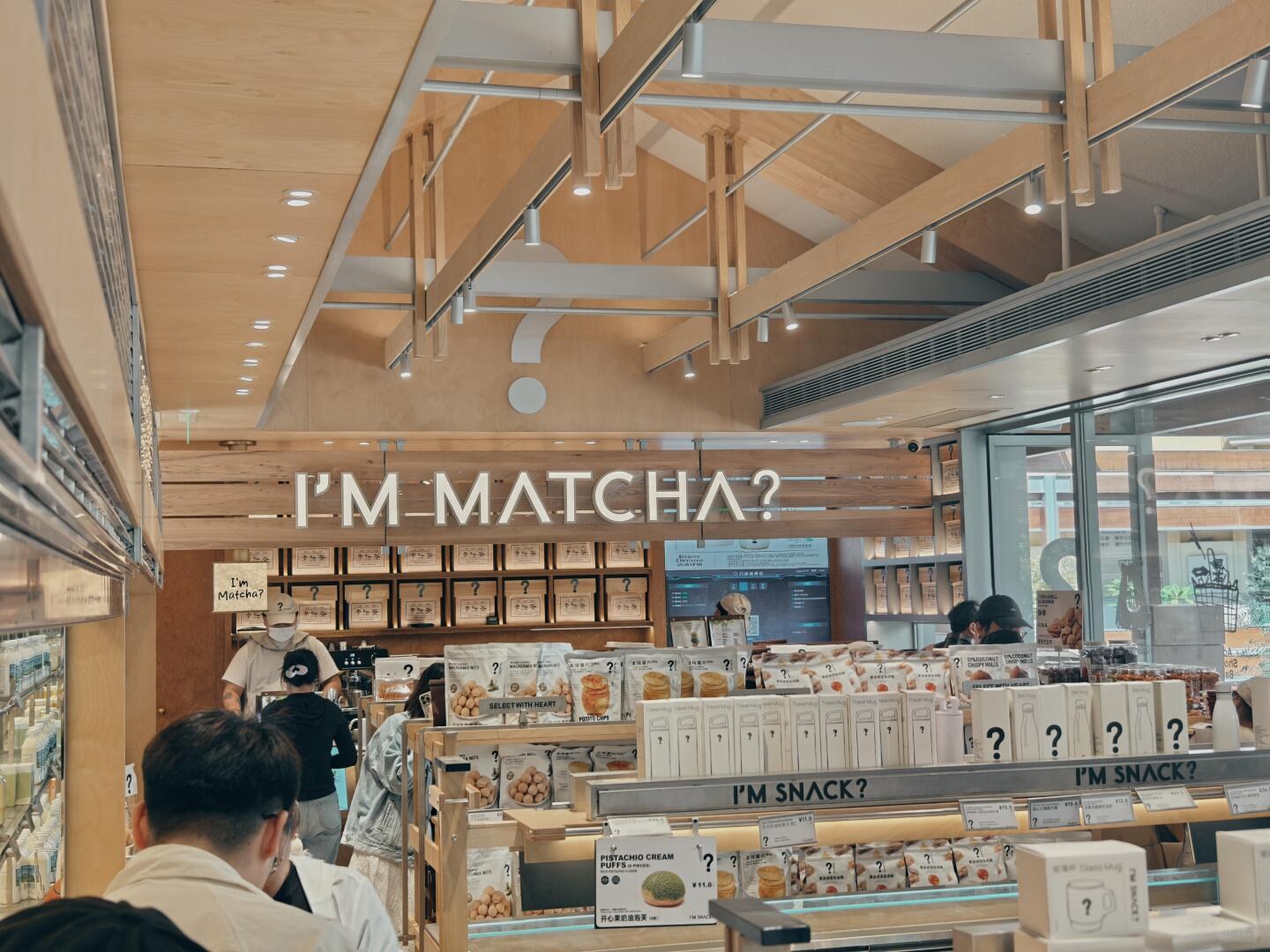
Southeast Asia is the most attractive grocery growth story in the world — and the market where published cost figures are the least comparable. One source quotes a Vietnamese 1,000 m² hypermarket at USD 1.5–2 million; another puts a Thai mid-size supermarket at THB 4.6–17.5 million; a Philippine guide lands at PHP 7–25 million. They are all roughly right, because they are pricing different formats, different ownership routes and different import shares.
This guide pulls the ranges apart into the blocks that actually decide your budget — and starts with the number most guides bury: the ownership threshold that determines whether you can open at all.
1. The Short Answer
For a foreign-invested, mid-size community supermarket (roughly 800–1,500 m²), the money actually spent to open — licences, site, fit-out, equipment, opening stock, staffing — spans:
| Market | Reported opening spend | ≈ USD | Source basis |
|---|---|---|---|
| Thailand | THB 4.6–17.5 M | $130k–510k | Mid-size supermarket, itemised budget bands |
| Philippines | PHP 7–25 M | $120k–430k | Mid-size store under the foreign-ownership regime |
| Vietnam | — | $0.9M–2.0M | 1,000 m² full supermarket incl. premium fit-out |
| Indonesia | IDR ~5–11 B | $300k–700k | Interpolated from franchise + equipment benchmarks |
| Malaysia | RM 2–5 M | $450k–1.1M | Shop build + fit-out, foreign route with RM1M+ paid-up |
Two caveats before you anchor on a number. First, these are planning ranges, not quotes — size, spec, city and import share move every line. Second, most of these figures exclude the market-entry capital some governments require you to have (section 4) — money that must exist even if it is never spent.
2. What moves the number?
- Format and size. The single biggest lever. A 100 m² minimart fit-out in the Philippines prices at PHP 3.8–7.0 million all-in; each additional 1,000 m² adds shelving, cases, trolleys, POS lanes and stock in near-linear fashion — plus a step-change in licensing once you cross a size threshold.
- The ownership route. 100% foreign ownership usually means a capital threshold; a local-majority structure avoids the threshold but costs equity and control. This choice changes your budget before a single shelf is bought.
- Import share. Locally sourced fit-out and stock are cheaper up front; importing from China is cheaper per unit but adds freight (8–15% of landed cost), duties, certification lead time and working-capital drag.
- The cold chain. Refrigerated cases, dedicated circuits and standby power are the swing item that separates a USD 350/m² fit-out from a USD 1,500/m² one.
- City tier. Prime Ho Chi Minh City District 1 retail exposure (6-month rent + deposit + fit-out for a small store) runs USD 207k–420k; the same store in Da Nang runs USD 91k–195k. Same country, half the capital.
3. The Five Cost Blocks
Every credible budget, in any of the five markets, splits into the same five blocks. The shares below are a defensible planning skeleton for a foreign-owned 1,000 m² community supermarket:
| Block | Share | What it contains |
|---|---|---|
| Fit-out & equipment | 40–50% | Partitions, flooring, ceilings, lighting, HVAC, shelving, refrigerated cases, checkout, POS, CCTV, generator |
| Opening stock | 25–35% | First fill of every shelf; imported lines add freight and duty; ties up cash longest |
| Labour & working capital | 10–15% | Hiring and training before opening, plus a 3–6 month operating-cost buffer |
| Site: deposit + first rent | 8–12% | 2–3 months deposit + 1–2 months advance is standard; prime locations add non-refundable key money |
| Licences & compliance | 1–3% | Company registration, sector licences, food handling, signage permits, professional fees |
The counter-intuitive line is the last one: licences are cheap almost everywhere — PHP 150k–600k in the Philippines, THB 30k–100k in Thailand. What is expensive is the capital requirement attached to the licence, which is a different kind of cost and the subject of the next section.
4. The entry gate: who may own a supermarket, and at what size?
This is the section that saves the most money, because it kills bad plans before they spend anything. Southeast Asian retail is not uniformly open to foreign investors — the rules key off store size and paid-up capital:
| Market | Regime | Threshold / rule |
|---|---|---|
| Indonesia | PT PMA under the Positive Investment List (Perpres 10/2021) | Supermarkets >1,200 m²: 100% foreign ownership allowed. Department stores 400–2,000 m² cap at 67%. Minimarkets & convenience <400 m²: closed to foreigners. Plus ~IDR 10 billion committed investment per business line; malls must reserve 30% of floor area for local SMEs |
| Malaysia | WRT licence from KPDN (via BLESS portal), 2–4 months processing | Supermarkets & minimarkets <3,000 m²: closed to foreign ownership. Superstore (3,000–4,999 m²): RM25M shareholders' funds. Hypermarket (≥5,000 m²): RM50M + 30% Bumiputera equity. Other distributive trade: RM1M. A 51% local partner may exempt you — discretionary, assessed on substance |
| Thailand | Foreign Business Act 1999, List Three | Retail/wholesale needs a Foreign Business License unless registered capital >THB 100 million (then 100% foreign, no FBL). Work permit route: ~THB 2M paid-up + 4 Thai employees per foreign work permit. Nominee shareholding is criminally enforced against — do not structure on it |
| Philippines | RA 11595 retail liberalisation | Foreign retail: PHP 25 million paid-up capital — but unlike Thailand's and Malaysia's threshold capital, this is money you may actually spend on the business. Registration itself: PHP 150k–600k |
| Vietnam | Investment Registration Certificate + trading licence + per-outlet retail approval (MOIT) | No single capital floor for most retail categories, but three licensing layers and an outlet-by-outlet approval process — budget months, not weeks, and legal fees to match |
The distinction that matters: in Malaysia and Thailand the threshold capital largely sits on the balance sheet as a gate — a real operator in Malaysia reported injecting tens of millions of ringgit of which less than half was ever spent. In the Philippines the PHP 25 million is your own working money. Budget for the gate and the spend separately, or you will find the store fitted out but the shelves empty because the gate consumed the stock budget.
5. Fit-Out: What a Square Metre Actually Contains
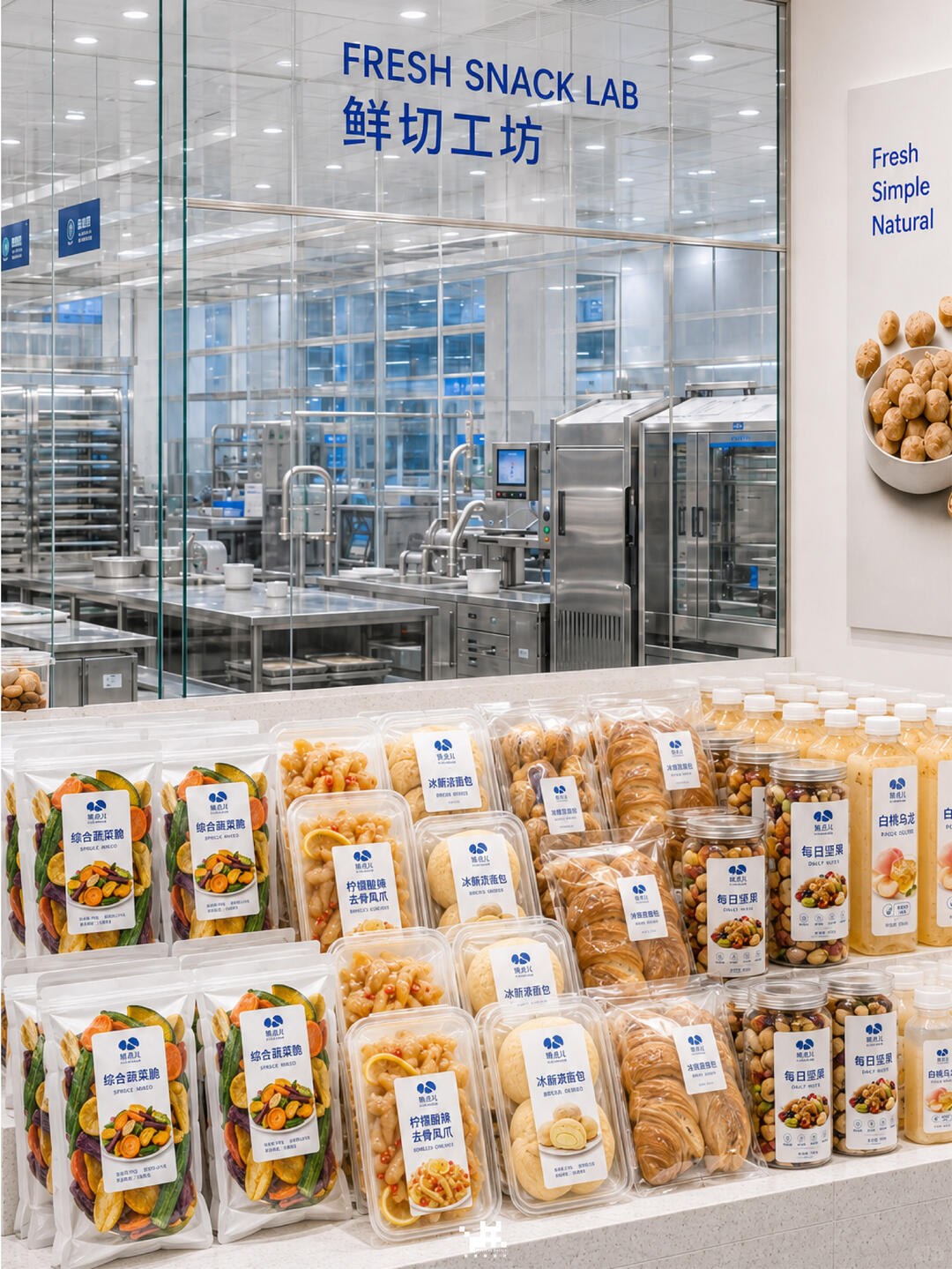
Philippine construction guidance publishes the most granular public breakdown — a useful proxy for the region. For a 100 m² minimart (PHP, 2026 planning rates):
| Line item | Range (PHP) | ≈ USD |
|---|---|---|
| Base fit-out (partitions, flooring, ceiling, lighting, HVAC, plumbing) | 2.0M–3.5M (PHP 20k–35k/m²) | $35k–61k |
| Gondola shelving (~17.5 linear m) | 105k–210k | $1.8k–3.7k |
| Glass-door chillers (8 doors) | 360k–720k | $6.3k–12.6k |
| Freezers (2) | 70k–160k | $1.2k–2.8k |
| Dedicated refrigeration circuits (6) | 48k–90k | $0.8k–1.6k |
| Extra A/C to remove chiller heat | 59k–92k | $1.0k–1.6k |
| Checkout counter | 60k–150k | $1.1k–2.6k |
| Stockroom racking (15 m²) | 22.5k–45k | $0.4k–0.8k |
| Security: CCTV, alarm, shutter | 80k–180k | $1.4k–3.2k |
| Food-to-go corner | 250k–600k | $4.4k–10.5k |
| Standby generator 10 kVA + transfer switch | 300k–450k | $5.3k–7.9k |
| Contingency (10%) | 343k–636k | $6.0k–11.2k |
| Total | 3.78M–6.99M | $66k–123k |
Note what this table teaches. The chillers and their power infrastructure cost more than the shelving — in a small format, the cold chain is roughly a third of equipment spend. The generator exists because plug-in chillers dump heat into the sales floor and the grid is unreliable. And contingency at 10% is not optional padding; it is the line that keeps a delayed chiller shipment from stopping the opening.
Vietnamese guidance for full supermarket fit-out — including shelving and refrigeration — runs higher at USD 800–1,500/m², reflecting premium spec and city-tier labour costs. Malaysian shop construction benchmarks (shell only, excluding fit-out, land and fees) run USD 680–1,360/m² at standard finish. Plan per market, not per region.
6. Equipment: Buy Local or Import from China?
Most Southeast Asian operators import their fit-out package — shelving, cases, lighting, checkout — from Chinese manufacturers, and the economics are genuinely compelling:
- Price gap. A standard 1.2–1.5 m plug-in refrigerated counter from a Chinese factory: USD 1,200–2,000. The equivalent from a Japanese or European brand: USD 2,500–4,000. Multi-deck glass-door cases (2.0–2.5 m): USD 3,000–5,500 imported vs USD 5,500–8,500 premium brands. Remote refrigeration systems, installed: USD 8,000–15,000 per linear metre.
- Container maths. A 20GP carries roughly 80–120 commercial display cases; a 40GP, 200–280. Sea transit to Southeast Asia is only 7–18 days. Reefer container freight China–Malaysia/Singapore: USD 1,500–3,500 (20ft) / USD 3,000–6,000 (40ft).
- The duty layer. Finished refrigerated display cases (HS 8418.50) attract 5–15% duty; ASEAN-origin units move at 0–5% under ATIGA. Indonesia adds SNI certification: +4–8 weeks lead time and 2–5% admin cost. Form D/E certificates under ASEAN+1 agreements cut most duty to zero on qualifying Chinese-origin goods — the Philippines, for instance, still levies its 12% import VAT regardless.
- Freight and logistics add 8–15% to landed cost; glass-door units must ship in wooden-frame reinforcement or sea-damage rates exceed 15%. Budget the crating.
Our buying guides cover the specification side in depth — see the gondola shelving buying guide for steel grades, MOQ and container loading, and the produce department guide for how case selection drives refrigeration cost.
7. Labour: Wage Floors and the True Loaded Cost
Southeast Asia's wage floors differ by a factor of fifteen across ASEAN — and the statutory minimum is only the base. Employer-loaded costs add social contributions of roughly 10–15% and, in most markets, a mandatory 13th-month payment:
| Market | Minimum wage (2026) | ≈ USD/month | Loaded-cost adders |
|---|---|---|---|
| Malaysia | RM 1,700/month national | $370–430 | EPF, SOCSO; RM1M+ paid-up shapes your expat headcount |
| Indonesia (Jakarta) | IDR 5,729,876/month (provincial; lows ~IDR 2.3M) | $320–330 | BPJS ~10–12%; mandatory THR (13th month); city-level UMK can exceed the provincial floor |
| Thailand (Bangkok) | THB 400/day (THB 337–400 by province) | $290–320 | Each foreign work permit: ~THB 2M paid-up + 4 Thai hires |
| Philippines (Metro Manila) | PHP 658–695/day (+PHP 85/day phased in from Jul 2026) | $290–320 | SSS etc. ~15% employer share; 13th month pay; sea-freight payroll cycle for imported stock months |
| Vietnam (Region I) | VND 5,310,000/month (+7.2% from Jan 2026) | $210 | Social insurance; regional wage tied to insurance ceilings |
A 1,000 m² community supermarket typically runs 25–45 staff depending on service level and fresh-food programme. At loaded costs, that is roughly USD 8,000–18,000 per month in wage bill — which is why the labour line in the opening budget (section 3) covers hiring and training before day one, and why the working-capital buffer must cover several payroll cycles of slow trade.
8. Working Capital: The Silent Killer
More foreign supermarket projects die of working-capital starvation than of fit-out overspend. The mechanics:
- Opening stock ties up 25–40% of total investment before the first customer. Imported stock adds a 1–2 month sea cycle — cash out at order, revenue weeks after arrival.
- Philippine guidance is explicit: beyond the PHP 25M entry capital, hold a PHP 2–7 million buffer (roughly 6 months of rent, payroll and SSS) — because registration, fit-out and the first containers typically consume the entry capital.
- Thai operators treat working capital as hard money, not reserve: import cycles are long, staffing ratios are constrained by work-permit rules, and a stockout in month two costs more than the buffer ever would.
- Seasonality bites. Lunar New Year, Ramadan and the Q4 holiday run inventory up 30–50% above baseline. The buffer should be sized for the peak, not the average.
9. A Worked Example: 1,000 m² Community Supermarket
Pulling the blocks together — a foreign-owned 1,000 m² fresh-focused community supermarket in a Tier-2 Southeast Asian city, mid-range spec, mixed local/import stock:
| Line | Low (USD) | High (USD) | Notes |
|---|---|---|---|
| Licences, registration & legal | 8,000 | 35,000 | Excludes any paid-up capital gate |
| Site: deposit + first rent + key money | 60,000 | 150,000 | $8–15/m²/month rent; 3–6 months upfront |
| Fit-out & services (base) | 150,000 | 300,000 | $150–300/m² shell & services |
| Shelving & dry fixtures | 60,000 | 120,000 | Imported from China, ~2–3 containers |
| Refrigeration & cold chain | 120,000 | 280,000 | Cases, circuits, install; the swing item |
| Lighting, POS, CCTV, trolleys, misc. equipment | 50,000 | 110,000 | High-CRI fresh-food LED specified per department |
| Generator & power upgrades | 25,000 | 60,000 | Sized for chiller + lighting load |
| Opening stock | 200,000 | 400,000 | 25–35% of total; import lines add freight cycle |
| Hiring, training & payroll to opening | 30,000 | 70,000 | 30–40 staff, partial months |
| Working-capital buffer (3–6 months opex) | 90,000 | 200,000 | Includes wage bill runway |
| Total to open | ~790,000 | ~1,725,000 | Plus any market-entry capital gate |
Read the two columns as the same store built lean versus built to a fresh-led premium spec. The gap between them is mostly the cold chain, the stock depth and the city — not the décor.
10. Ten Mistakes That Blow the Budget
- Conflating threshold capital with opening spend — the gate consumes the stock budget (the Philippine PHP 25M trap).
- Choosing a format on the wrong side of a size threshold — a 2,900 m² store in Malaysia is closed to you; 3,000 m² costs RM25M.
- Ignoring the cold chain's power tail: chillers, circuits, heat-removal A/C and the generator together rival the shelving budget.
- Importing without certification lead time — SNI adds 4–8 weeks; the opening date slips.
- Skipping wooden crating on glass-door cases to save freight; sea-damage rates exceed 15%.
- Signing a prime lease with key money and treating it as recoverable. It usually is not.
- Sizing the working-capital buffer for average months, then meeting Ramadan or Q4 at 140% of baseline inventory.
- Using nominee shareholding to dodge Thailand's FBA — criminal exposure, not a loophole.
- Budgeting wages at the statutory floor and forgetting the 13th month, BPJS/SSS contributions and the work-permit staffing ratios.
- Designing the store after signing the lease — the layout determines the power load, the chiller positions and the egress, and retrofitting any of them costs multiples.
Frequently Asked Questions
How much does it cost to open a 1,000 square metre supermarket in Southeast Asia?
Published planning ranges span roughly USD 150,000 to 2,000,000 for the money actually spent to open, depending on country, spec and import share - before any market-entry capital requirement. A reasonable mid-range planning figure for a foreign-owned 1,000 square metre community supermarket is USD 0.8-1.5 million, of which fit-out and equipment take 40-50% and opening stock 25-35%.
Can a foreigner own a supermarket in Southeast Asia?
It depends on store size and country. Indonesia allows 100% foreign ownership of supermarkets over 1,200 square metres but closes minimarkets under 400 square metres. Malaysia closes supermarkets under 3,000 square metres to foreign ownership and requires a WRT licence with RM1-50 million paid-up capital by format. Thailand restricts retail under the Foreign Business Act unless registered capital exceeds THB 100 million. The Philippines requires PHP 25 million paid-up capital under RA 11595. Vietnam requires an investment registration certificate, trading licence and per-outlet retail approval.
What is the fit-out cost per square metre for a supermarket in Southeast Asia?
Plan on roughly USD 350-1,500 per square metre all-in. Philippine published bands put a mid-range commercial fit-out at PHP 20,000-35,000 per square metre (about USD 350-615) before shelving, chillers and generators; Vietnamese guidance for full supermarket fit-out including shelving and refrigeration runs USD 800-1,500 per square metre. The cold chain is the swing item - refrigerated cases, circuits and standby power can double a basic fit-out budget.
How much working capital does a new supermarket need?
Plan for 3-6 months of operating costs on top of the opening budget. Opening stock alone ties up 25-40% of total investment, and imported stock adds a 1-2 month sea-freight cycle before a single sale. Philippines guidance for a mid-size store suggests an extra PHP 2-7 million cash buffer beyond the PHP 25 million entry capital; in Thailand, imported stock cycles are long enough that working capital is treated as hard money, not reserve.
Related: how to plan a supermarket floor plan →
Related: gondola shelving buying guide for overseas buyers →
Related: produce department design - layout, lighting and refrigeration →
Related: how much does retail interior design cost →
Sourcing the fit-out package? See our vetted factory network →
Budgeting a Southeast Asia store? Request a costed fit-out plan →